
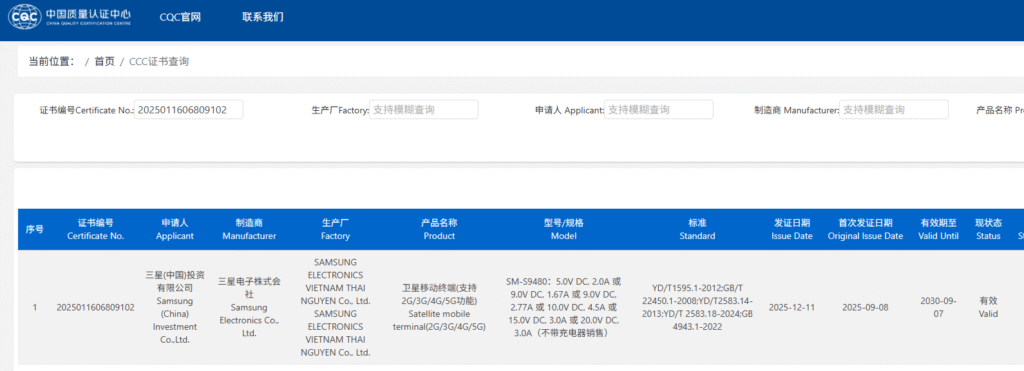
Specification details of Samsung’s next-generation flagship smartphone, the Galaxy S26 Ultra, are gradually coming to light. Recently, a Samsung device with model number SM-S9480 passed China’s 3C certification, clearly indicating support for up to 60W wired fast charging.
This certification confirms a significant upgrade in the charging performance of the Galaxy S26 Ultra. Notably, Samsung has already officially released and started selling a 60W PD/PPS-compatible charger, a move widely interpreted as early preparation for the new flagship’s high-power fast-charging solution.
60W fast charging on the Galaxy S26 Ultra means you can charge from 0% to 75% in about 30 minutes. It uses high-voltage PPS technology to deliver more power safely, significantly cutting down the total time you spend tethered to a charging cable compared to older models.
I used to carry a power bank everywhere because my old phone took two hours to charge. Now, seeing how this technology evolves makes me realize how much time we can actually save. Let’s look at how this changes your daily routine.
How Fast Is 60W Charging on Galaxy S26 Ultra?
I often hear people ask if 60W really feels faster. I asked the same thing before. Numbers sound good, but daily speed matters more.
60W charging can reduce charging time in early stages and short sessions. It helps the Galaxy S26 Ultra recover power faster during brief charging moments instead of only speeding up full charges.
When we talk about “speed,” we are really talking about the charging curve. A phone does not stay at 60W the whole time. It starts very fast when the battery is empty and slows down as it gets full. This protects the battery cells from getting too hot. I have noticed that the first 50% is where you see the real magic.
Does Galaxy S26 Ultra Support PD and PPS Charging?
I used to get confused by all the labels on charger boxes. I wondered if I could just use my laptop charger or if I had to buy a special Samsung one.
Yes, the Galaxy S26 Ultra fully supports USB Power Delivery (PD) 3.0 and Programmable Power Supply (PPS). PPS is the most important part because it allows the charger to adjust voltage in real-time to match the battery needs.
To understand why this matters, we have to look at how electricity enters your phone. Standard Power Delivery (PD) uses fixed steps, like 9V or 15V. But batteries are picky. They like specific voltages that change as they fill up. This is where PPS comes in. It lets the charger talk to the phone every few seconds. They agree on the perfect voltage, like 11.2V or 9.4V.

Why PPS is Better Than Standard PD
Less Heat: Since the voltage is precise, the phone’s internal circuits don’t have to convert the energy as much. Conversion creates heat.
Efficiency: More energy goes directly into the battery instead of being wasted as heat.
Battery Health: Keeping the phone cool during a 60W charge helps the battery last for more years.

How Much Faster Is 60W Than Previous Galaxy Ultra Models?
I remember when 45W charging arrived. It helped, but it did not change habits for many users.
60W charging offers a noticeable improvement over earlier Galaxy Ultra models by shortening partial charging time rather than pushing extreme peak speed.
In the past, the jump from 25W to 45W was a bit disappointing. It only saved about 5 to 10 minutes for a full charge. This happened because the 45W peak only lasted for a few minutes. With the S26 Ultra, the 60W limit is supported by better thermal materials inside the phone. This means the phone can “soak up” that high power for a longer time before it has to throttle down.
Where users feel the upgrade
- Faster power recovery
- Less waiting before going out
- More useful short charges
Why the improvement feels bigger
Charging curves matter. If 60W holds higher power longer at low levels, time savings increase.
This is a quiet upgrade, but daily use makes it clear.
I think the move to 60W shows that Samsung is finally listening to users who want to compete with Chinese brands that offer 100W or more. However, Samsung is more conservative to ensure the battery doesn’t die after one year. This 60W balance feels like a safe middle ground. It is fast enough to be useful but slow enough to be safe.
Does 60W Charging Improve Daily Charging Efficiency?
Yes, 60W charging improves efficiency by reducing “top-up” times. Instead of long overnight sessions, you can use short 10-minute bursts during the day to keep your battery between 20% and 80%, which is the healthiest range for lithium batteries.
Efficiency isn’t just about speed. It is about how the power fits into your life. With a 60W charger, I don’t feel the need to plug my phone in every time I sit at a desk. I can wait until it hits 20%, plug it in while I shower or eat lunch, and it’s back to nearly full. This is a change in habit. We call this “buffer charging.”
Benefits of 60W for Different Users
Benefits of 60W for Different Users
Travelers: Get a massive boost during a short layover at an airport gate.
Gamers: Quickly refill the battery after a heavy session of high-graphics gaming.
Vloggers: High power helps when transferring large files and charging at the same time.
What Charging Accessories Are Required for 60W Fast Charging?
I often see people miss full charging speed because of accessories. I made that mistake myself.
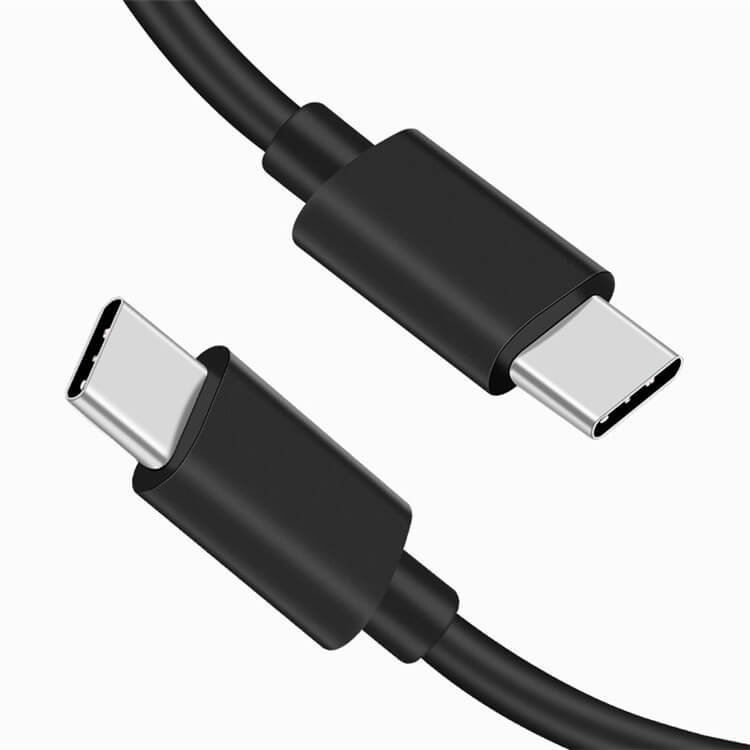
To reach 60W charging, Galaxy S26 Ultra needs a PD charger with PPS support and a high-current USB-C cable. Without both, charging speed will drop.
The most common mistake people make is using an old cable. Most USB-C cables that come with headphones or cheap gadgets are only rated for 5V 2A at a lower amperage
Essential Checklist for 60W Charging
| Item | Requirement | Why? |
| Wall Plug | 65W+ GaN Charger | Provides the raw power needed. |
| Protocol | PPS Support | Real-time voltage adjustment. |
| Cable | 20V 3A 60W Rated | Prevents cable overheating. |
| Port | USB-C | Necessary for PD communication. |
Samsung already released a compatible 60W charger. This shows a full charging plan, not a single feature.
Conclusion
60W fast charging on Galaxy S26 Ultra focuses on real efficiency, time savings, and safe power control instead of chasing extreme numbers.
Related Products

USB C to USB C Cable
USB-C to Lightning Cable
Right Angle USB C Cable
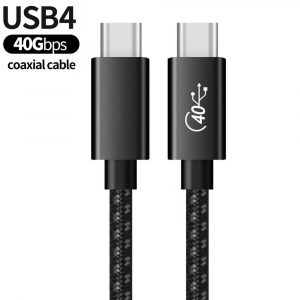
40Gbps USB 4 Cable
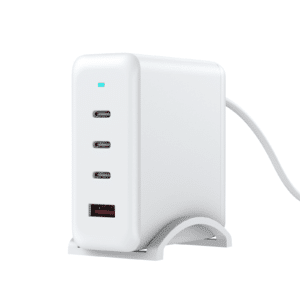
100W USB C Adapter

65W USB C Wall Charger
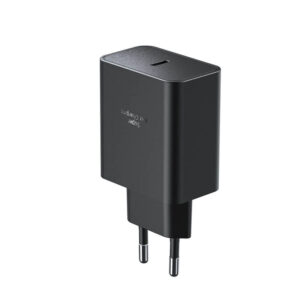
Samsung 45W Charger
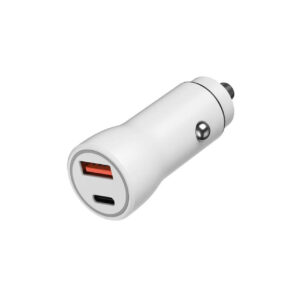
TUV Certified Car Charger
Wandkey Electronic Co., Ltd – Your Trusted Partner for Premium Phone Accessories
Wandkey Electronic Co., Ltd is a leading manufacturer specializing in high-quality phone accessories, offering a full range of USB-C Cables (2.0/3.0/3.1/3.2 Gen 2/USB4), Lightning Cable, iPhone Charger cable, PD Fast Charer, GaN Wall Chargers, Car Chargers, and more. With UL, CE, RoHS, Reach, PSE, KC, FCC, UKCA certificate, ensuring top-tier quality and safety.
What We Offer
We provide OEM & ODM services to help brands and businesses customize their products, including:
✅ Custom Branding & Logo Printing – Enhance your brand presence with personalized designs.
✅ Tailored Product Specifications – Customize cable lengths, charging power, materials, and more to fit your needs.
✅ Certified and High-Quality Manufacturing – Strict quality control and compliance with international safety standards.
✅ Packaging Customization – We offer bulk packaging, retail packaging, and eco-friendly solutions.
✅ Technical Support & After-Sales Service – Professional guidance from product development to after-sales assistance.
Who We Serve
Our business model is B2B wholesale, catering to brands and manufacturers who require premium charging accessories. Our main customers include:
✔ Phone accessory brands looking for high-end charging solutions.
✔ Electronics and smart device manufacturers needing reliable charging components.
✔ Medical equipment companies, monitoring system providers, and other industries requiring certified power solutions.
Looking for a reliable supplier for premium USB cables and chargers? Contact us today to discuss your project needs and get a customized solution tailored to your brand.
Top Topics
2025 Latest MFi Authorized Manufacturers list
Differences of Lightning Connector
How to check MFI Certification
How to get MFI Certification for Your Brand?
USB C Pinout Guide and Features
Understanding USB PD 3.1 vs PD 3.0 vs PD 2.0
USB 2.0 vs 3.0 Cables: Speed, Compatibility & Buying Guide
Why does the MFI Certified Lightning Cable so expensive?
MFI Product Packaging Requirement?
Disassemble MFI Lightning Cable
How do we guarantee the quality?
How to identify counterfeit or uncertified Lightning connector accessories
How to Choose Fast Charging Cable for Your Phone
How do I choose a USB-C cable?
Differences between USB 3.0 3.1 and 3.2
Test on USB C to USB C 3.1 Cable
Test on Right Angle USB C to USB C Cable